Interviews
Charles Blackwell
Tagline
New Space Studio: Charles Blackwell Interview
BR I wanna start by just asking you what your (artist) name is.
CB I go as Charles Blackwell as an artist, but I go as Charles Curtis Blackwell as a writer. OK, because there's another Charles Blackwell. And I've been…people have mistaken me for him. He wrote a theater play and I write theater plays.
BR What are you working on right now?
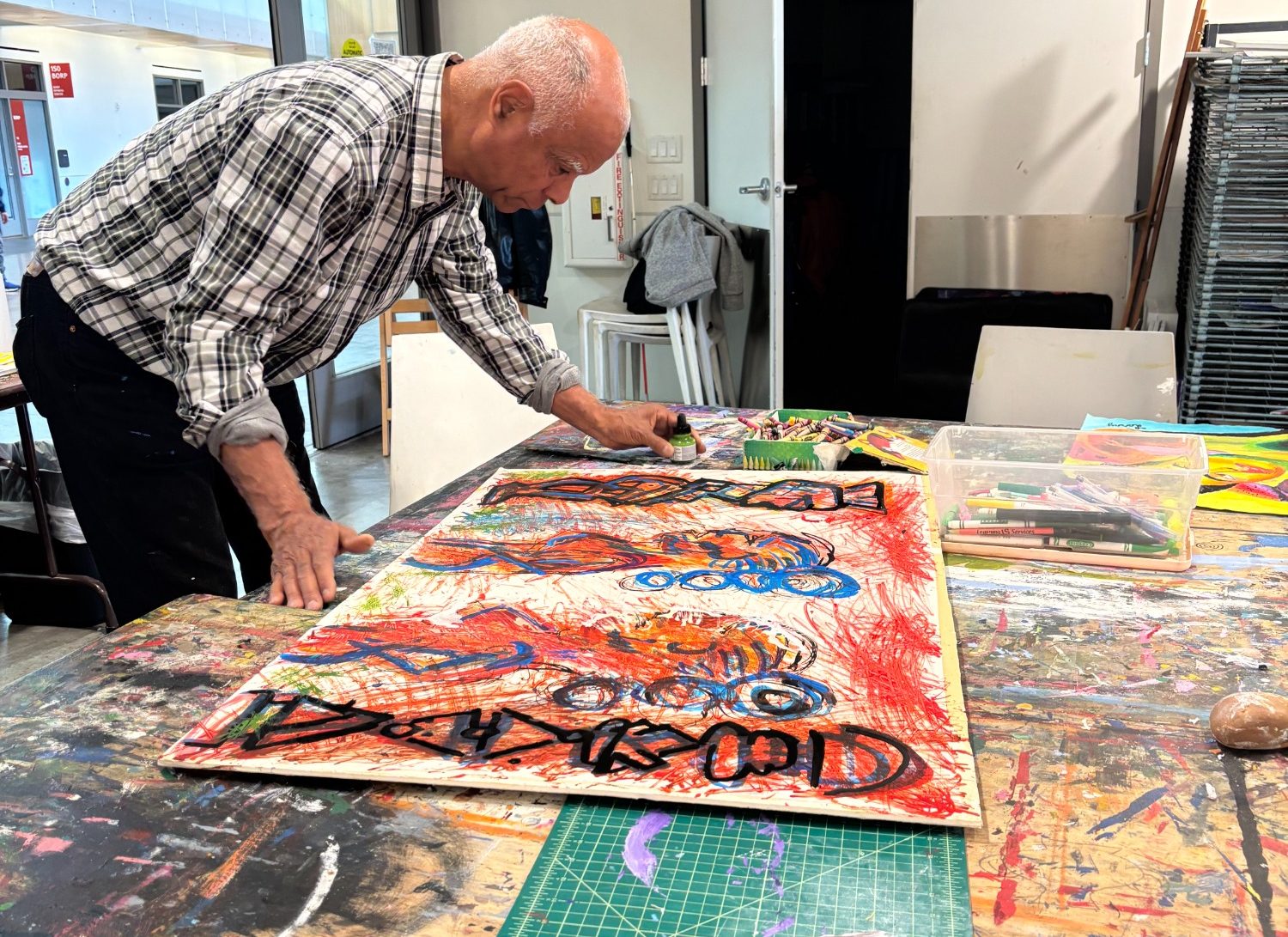
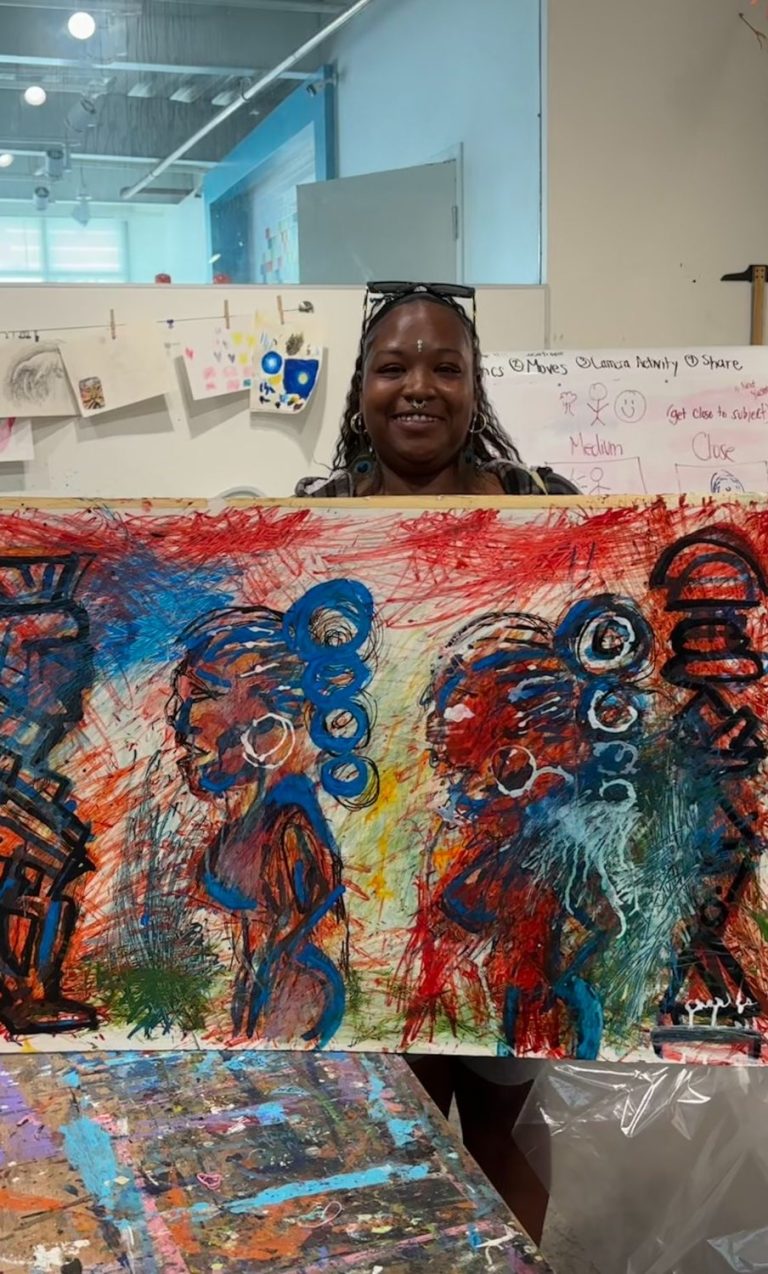
CB I'm doing an ink piece, it's two women, African, and it's a takeoff on a Khalib and I have an African totem on the end, and I'm gonna probably put another African sculpture on the other side. It's an Afro Central piece, yeah and I was telling Kali about the phrase, used to be you know, “black is beautiful”, and “it's so beautiful to be black” because there was so much poor self-esteem and uh the whole image that that African Americans had of themselves. and that the whole thing came about in the - you could call the cultural awareness, the black arts movement of the late sixties, 1960s. And people begin to appreciate who they were.
That's what it is.
So it's kind of like when you get to the other side of, if I could call it, racist America, they want to say, oh… like a black nationalism…uh it's black racism, you know, and that's not what it was about. See I don't know if you know it, but I worked in prisons.
BR No, I didn't know that.
CB Yeah, I did writers’ workshops in some prisons. Oh. And when I discovered poor self esteem, (people who) don't know the history and don't appreciate or embrace their culture. It's almost like a one way ticket to prison...
BR When was that?
CB When did I do the writers’ workshops? In the nineties. It was kind of a funny story. So, this other poet friend I was in Sacramento…she says, hey, the William James association, they have this function. I says, “oh yeah”, and she says, “yeah, they're gonna have music, a band, people doing poetry” and I say, “oh, yeah, whoopy.” And she said and they're gonna have food. I said, oh, yeah, let's go. And so somebody was reading, and then um I'm standing leaning against this pole and uh, this lady, the band was playing, and she said, you want to dance? And I said, yeah, let's dance. And that was the interview. I got hired. They wanted someone that wasn't so intellectual you couldn't uh connect with the inmates, and you weren't too scared, you know. So I was just crazy enough to go behind bars and do writers workshops.
BR I want to ask you also about what you did before that, like, what has been the evolution of your art?
CB Oh, wow, that's…wow, you gonna be here for now until Christmas.
BR Yeah, I'm interested about what led you up to the art that you're doing now.
CB It came easy, in grade school, you get the compliments, the acknowledgement from teachers. And I talk about poor self esteem cause I too, was a victim of poor self esteem, you know. And so, get this praise, and then you get other instructors that, uh they're very strict and very by the standards and not the same. And then they crammed the classical music down my throat in grade school, and I liked jazz at an early age. I mean, rock and roll was out, but, you know… I said, yeah, but I like this, you know. And so with classical, anyway, I tried to flunk the test they give you to take to find out if you're gonna go into art, or if you're gonna go into music. I didn't want to go into music..I went through the test going “true false true false true false” and wound up going into music. It’s a wacky story. So it was bad enough, but, you know, I mean, I can appreciate Mozart, Bach, Beethoven now, but were you in grade school, you know, it wasn't my cup of tea and and I was, you know, trying to listen to Count Bassie, or Duke Ellington, or Louis Armstrong, you know, he was on TV. It said, oh, wow, look at that, you know. And so, uh, now it's not Mozart, it's not Bach, it's not Beethoven. It's John Phillip Sousa and the marching band and God, it was a disaster. And so at the middle of the year, I had transferred back to art and I was back doing what came easy. And so high school, you know, it was kind of iffy. The one teacher that was really nice was my last shift because I was in a busing program and it bussed us to the school and it turned into a racial riot.
I had the art instructor - she wasn't the greatest, you know, it'd be racial remarks in the class, she wouldn't say nothing to stop it. The last year (of highschool, I had) this teacher, she was really cool. She was a hippie…I think they said her husband had to go to a meeting - something with the officials - you know. And he had a tee shirt on…he painted a tie on the tee shirt, and he went into the meeting. That lets you know what they were like. And so then I transferred to this school and I had a teacher, he was this guy named Waterstreet, Ken Waterstreet. About 10 years later, I ran into him, he was exhibiting somewhere in Europe. And he did this thing with lips in the clouds, like a large four foot painting, you know. And I guess you would call it, he was probably in the pop art, op art scene, you know. I was a poor student in high school, like a D student, maybe a C. I got to college and I met this teacher, her name was Isabel Shaskin. She was in the art department. and she had the same political science teacher that Angela Davis and Abbie Hoffman had, and really enlightened me. And she liked the stuff I came out with, and I got into conceptual art, because that's kind of where she was coming from, and I really grabbed onto it, making statements with art. That was kind of like a big, you might say leaving from learning all the basic stuff in high school, and now you come to this.
And so, next thing you know, I had an accident. I'd actually dropped out of college, trying to figure out what to do. And the accident just wrecked my life. Well I had the accident when I was 19 and then by (the time I was) 20, a few months later, I started changing and I was a total wreck. I thought I was gonna go totally blind. I lost my tunnel vision. I wound up with (just) my peripheral and I thought it was gonna keep going. It stopped at my peripheral. I don't have no tunnel vision. I have a side, uh, peripheral vision. And, you know, it's almost like mentally, I was just going crazy because I mean, I thought I was gonna go totally blind.
When I first got out of college, I was trying to get a job and I was on the wrong track, you know, you go to college, get a job…not really. And I learned it's about…you get an education so you can exist, cope, and deal in the society in which you live, you know. And I said, wow, that's it, cause if I'd have known that, I wouldn't have been chasing the job market and getting the doors closed, and I was getting depressed. And finally, I got a job, I jumped in grad school, uh social work, I finished in sociology. And so I got this job, it was a field placement with the social work department, but I got connected, and it was at a high school, and me and the coordinator over over this thing, it was a career counseling, we we hit it off like friends and and real I mean, really became good friends. and he said, uh, there's this job, you know, why don't you file for it? I said, man, I've been out of art for years. I wouldn't know what to do. He says, yeah, well, you had those pieces. I think I gave him one, and it was conceptual, it was like a carrot, carrot, carrot, and then the carrot was dismantled, and then the rebirth of the carrot upside down. I learned that from Isabel Shaskin. And so he shot the photos. turned it, I had to fill out the paperwork and I got selected as a Sacramento County Cedar artist. That was under Jimmy Carter, The Comprehensive Employment and Training act. And you might say I was lost. I didn't know what to do. I was you know, I had been out of art for seven years and I did a seven foot carrots. And then I did braille dots on canvas, you could touch them and feel you. and I said, do not touch.
So I was still on that op art pop art thing, you know. And then I did a bunch of photo transfers. And then I started making political statements. It was during the time of the U.S. in El Salvador. And all I wanted was the print from the magazine. I didn't want the image, whatever the image, I didn't want that. I did these images and they were exhibited in Washington, DC. I met someone when I lived there, I met Alan Gordon, he used to be the head of the art department at Cal State Sacramento. He was an African American African art historian, and he introduced me to this group called the NCA (National Conference of Artists), a group of African American artists around the country. And the founder was this lady Margaret Burroughs and she organized the DuSable Museum in Chicago. And so I was meeting these people from Philly, Chicago, New York and I got into this thing and I realized because I'm in Sacramento and tried to get a job, tried to get a job, and he realized no, if you use your talent, and if you get the job, you get some funds and with that, you can use your talent, produce and purchase the supplies. And so I my mindset started changing.
And then you're hanging with the artist there. I remember me and my friend Denny’s out there at 10 o'clock and stayed until 1 o'clock talking jazz and art and poetry and everything, you know, and realizing I'm on a different note. And the big mistake I made, (when) I moved to the East Coast, but I had moved for reasons of love. I came back to California and started producing again, you know, just inks, when I met Zack, who was operating a space which is now New Space, it was called Access Studio for the Disabled and we were on 6th Street and that's when I really started, really just producing like crazy. I think I was doing a lot of color design and moving more toward Afrocentric, you know.
BR When was that?
CB Probably around 2003 and Zach was great, and so it's always Nick. And then I found out about Hospitality House over in San Francisco. And if we had all the supplies we would produce, and I was doing kind of art therapy, trying to regroup. I was in a horrible court battle that almost destroyed me, it ran for quite a while and got jerked around by my lawyer and the judge. I actually wound up homeless sleeping from one place to another. It was in Sacramento. I guess I had enough sense cause I had worked art therapy myself before in Washington DC and another thing in Sacramento. So that's what I was doing, you know, producing art and I was doing the writing, everything trying to keep my sanity.
BR So, what happened in the time between being homeless, and doing the art therapy, and all that, and then what you're working on now?
CB This friend helped me. It was kind of like, you never know who your friends are. He was a friend of the family. I left the house there, they had evicted me, and I took my shower and had a change of clothes, and I was at a point, just roll over and give up, and walked out the front door, got to the driveway and he said, uh where are you going? I says, I don't know, he said, get in the car. And I get in the car, and I went to his place and he went and made a key and said, here, you could stay here. and I just tried to accept it. And then trying to try to regroup. I was staying in Berkeley…and I was stumbling around and that's how I ran into Zack at the back of City Hall, they had a thing with people advertising at different agencies. and that's how I wound up coming there. I think that was around the same time I found Hospitality House. So I did a bunch of pieces about the Tenderloin, you know, people homeless on the street, people sleeping on the sidewalk, and I did a bunch of these. And then finally I moved into the Afroentric more and more. which I felt more comfortable with because, I mean, how many pieces can you do about homeless people, you know? It kind of has a depressing note. I would come to New Space or or, you know, the art space, and that was maybe once or twice a week, but I was going to the Tenderloin four, five days a week and had to cut it down because the Tenderloin is too depressing. And so wound up organizing stuff. and it was a crazy story - this lady, goes by the name of Kat, walked off the job, she was a chaplain at a prison at a Federal prison in Colorado. And she walked off and moved to the Tenderloin - really crazy story.
We wound up organizing some small stuff in the Tenderloin and tried to do performance art. It didn't quite work because we pulled people from the art space, who were residents in the Tenderloin…it didn't work for theater. I mean people came, but it just wasn't the greatest, you know. And we did stuff with this place called Faithful Fools, it's another agency she was connected with. And so, I don't know if you just said that was part of my evolving in terms of art, but they ran the plays about three times. And they had an exhibit of my art at Faithful Fools. And then I exhibited at the Hospitality House art space, at least I don't know, about five or six times. I think you could say I evolved to a point where I do stuff trying to…can it encourage, can it inspire? And I think I get that from being in the Tenderloin, because one day this lady came in from off the street, I was at the table working on a piece. It was like an African mask, an African figure. And she came and she said, "Brother, I really like your art. It really inspires me.” I said wow, that was a powerful compliment. And someone else said that, this young man, he came to the art space, but he was also in Job Corps and that's on Treasure Island, and so he said the same thing. It says a lot, especially when you're in a place like, you know, the Tenderloin. So I just tried to take that and say, okay, you know, and it might not be Afrocentric, maybe it might be something else, whatever it is if I do something might make somebody laugh, okay, cool, you know.
BR I like that. So, what about now? What's going on now?
CB Just turned in photos for Chicago Guild for the Blind. And I’m getting ready for an exhibit. This group, they're trying to organize a theater, and they pulled me in as a writer. and they know I'm an artist. They said, could you donate some pieces? I said, yeah. And so I'm collecting about maybe 30 pieces on canvas, which is good, cause I just got some out the other day we got them out of the closet. Because Nick said, you know, we gotta get some of this stuff out of here. I said, okay. My place looks like a warehouse. It's too much, too much cluttered with art. And I said, okay, good, maybe this would be a good opportunity, you know, if it doesn’t sell for full price, I don't care, just just get it out, you know.
BR What about if people are reading this and they want to come to your show? Do you have a website or something they could go to?
CB Oh yeah, https://charlesblackwell.weebly.com
What were you about to say before I asked you where the show was?
BR You were talking about what's going on now. And then I interrupted you and asked you where the show was, but you were talking about what kind of art you're doing right now.
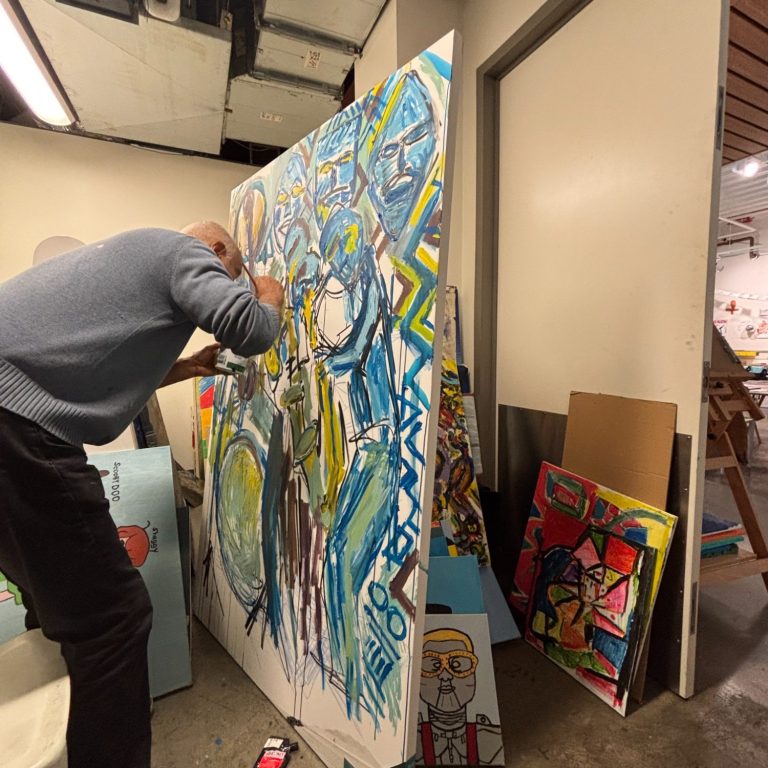
CB Oh, I've done it before. Color design and poetry on canvas and it's okay or on paper. I'm trying to figure out how to go in another direction. I do stuff like the jazz musician, African culture, music is connected to the culture, you know. Different rhythms which originate from Africa, you know, and then you have jazz. But you know, I just get kind of bored with some of the stuff, you know, I must have done at least 60 images of jazz drummers. You know, that's enough. and then I did a bunch of pieces like the big large piece in the closet with the musicians. And I guess I found out it was meant by getting pigeon holed, you know. People, they expect that certain thing. and I'm trying to move out of it, and you just get tired of it. And I guess I'm not as experimental as I used to be, a little bit, but not as much as I used to be, you know.
So I'm trying to figure out, okay, what can I do? And one thing I've been contemplating on coming up, I tell people there, like this lady, they wanted me to speak at the school of the arts downtown, and she wanted me just not too long ago. wants me to come and do a lecture to the students about how they can have their portfolio ready, how they can connect with or basically with Wall Street, you know, and they could, you know, come out of school and they'll be job ready. And I told her, look straight up, look number one, I'm not a capitalist, you know. Number one, I don't want to present something to a bunch of young people and then they walk out the door and crash…hit the reality. It's like a joke, you know, and she got kind of upset with me, but I said, okay, cool, you know, well, we'll get someone else. That's fine with me,
Were you gonna say something? Go ahead.
BR I was gonna ask you about…because I remember when we talked about the mural, and how we could make it accessible to blind people, you had some interesting things to say. I think people could learn from that, so I thought maybe you could talk about that a little bit.
CB Oh, yeah, you know what's interesting is there's a lot going on there. artists being recruited to do stuff pertaining to the disabled. We did the mural here about 50 years ago, something about the disabled movement, you know. So we did stuff flat, you know, on canvas and you know, put it on.
They got this thing, they call it Touch Tile, and you can touch it, you know. And there's all kinds of ways you can approach it. I remember this guy, he did it in San Francisco. He was amazing. This guy was totally blind. It was at the Lighthouse For The Blind and they had this exhibit and they used to do it at the basement of City Call, Civic Center. and it was a real Hullabaloo. And he would cut strips of cardboard because you know (there were) lines in between the slices of cardboard. And he did these images like, it might have been a flower, you know, and it bloomed. And he did one, it was like an African mask, so you could walk up and touch it. I think he coated it maybe with a polyurethane or acrylic, he did a clear gloss coat. So you could touch it and it's not gonna move, it's not gonna fall apart. The guy was totally blind. and not only that, he did a sculpture of himself. It made me feel like maybe I'm not using my blindness to the max. And then they do this thing like, you know, pieces of wood, you could touch it and feel, but you're going to create an image. You create a shape and so people are gonna touch and you gotta make sure nobody's going to touch and not get a splinter in their hand.
And there's all kind of stuff you could use. And it's kind of like, what do you call it ingenuity and pulling people that they’re' partially blind or totally blind and and have them do it. And I did a class at Lighthouse For the Blind, and it was fun using my hands to touch that person's hands, you know, okay, here we got the paint, here's the paper, you know. And I did that with little preschool kids when I lived in DC. and it was interesting because the teachers were afraid to put their hands on the children. And that's I mean, that's the society we're in.
BR Were the children blind?
CB Yeah, uh-huh. And I said, okay, here we got the clay feel here, and I put my hand on their hand. I said, here we gonna use this, feel this. The kids were having fun. and the teacher says, oh, wow, I didn't know you could do that. I said, well, hey, look, your hands become their eyes. And all of a sudden they said, oh, wow, you know, but part of it is the hang up of the society, not supposed to touch person, like, you be on the subway, you're not even supposed to speak to anybody on the subway train, you know. So, uh, I mean, it's like an unwritten law. So that's that's the catch. It's like trying to take that and make it work.
I should be doing more. But they say people who are partially blind are the most difficult to deal with because we're in two worlds: sight and unsighted. So I'm always straining and using my side vision. So trying to read stuff, I'll be outside trying to find an address and I'm walking up to a business, looking at what is on the sidewalk, and people are worried like, what is he doing? You know? Well, what what else can I do? Unless I ask somebody, but if there's nobody there…I've been in place with people that come outside the door. Oh, you looking for something? Oh, yeah, I'm trying to try and say, oh, you two doors down, you know, so they're nice enough to say. I cussed a bus driver out one day. I asked, can you tell me the number of this bus. It's right there if you just look at and I cussed her up - very American.
BR I mean, I get it.
Is there anything else that you would wanna add? if people were gonna be reading this? Like, resources? I know we have Center for the Blind over here.
CB Chicago Guild for the Blind, they changed their name to Second Sense. And I've actually donated pieces to them because I like how they approach a person that's losing their ass. Number one, they take time out and say, they say hey Charles is it your first time here and you say yeah, and they said well, hey, what do they say we go get a a cup of tea, a cup of coffee and sit and talk for a minute, and in other words they kind of make friends with the person. And well, so where are you at now, in terms of where you live or, you know, what are you doing? and say, well, I'm not doing nothing. What did you do before, you know? And so and then they come to a point and say, what would you like to do? Because I went through voc rehab and after I got after I adjusted to trying to, you know, get back into the swing of things. And it was not a good experience. They had two things, you want to go to cafeteria management or some kind of computer thing? They pushed you in those two, then maybe they push you into some other job, I heard they were doing that trying to get people ready for the corporate world.
And I had already learned this lady, she was really cool (I got a job with the state). And her name was Elena. She was totally blind and she was at the counselor for voc rehab, and she knew I was involved in the arts and she was really cool. And so I got laid off and she swung it so I could keep the TV, a visual tech it enlarges print. She swung it so I could manage to keep the TV and keep writing, because she knew helped me with my talent. And she organized the group, they would go riding dune buggies. Blind people driving dune buggies and playing beep baseball*…and she was doing that because people would come to her camp and she was aware of how (people had) gotten pushed into these jobs and they wound up depressed.
She saw what she really saw for what it was. And so it's kind of sad that Lighthouse was doing that a few years ago, and I just felt sorry for him because it ain't going to work, you know, pushing some blind people at me. There might be you might get two hours three out of a hundred mil being successful I mean, you know, but it it doesn't work for everybody, you know. But Chicago Guild for the Blind, it's amazing how people that lose their sight wind up doing the things they want to do.
BR Anything else? Any last words?
CB Hey, be encouraged no matter what…
For the time that we live in, voc rehab might not even be here in another two months. (Charles laughs)
BR Thank you, Charles.
CB Thank you.
*Beep baseball is an adaptive sport of baseball for blind and visually impaired athletes, played with a beeping ball and buzzing bases instead of sight. All players wear blindfolds to equalize visual acuity, and the game is won by a team that can successfully hit the ball and run to the correct buzzing base before the opposing team's fielders can retrieve the ball.